The Taskforce on Inequality and Social-related Financial Disclosures (TISFD) is a nascent framework that has attracted significant attention as the “third wave” of information disclosure taskforces, following in the footsteps of TCFD and TNFD.
While both TCFD and TNFD were implemented following public consultation processes, corporate practitioners at listed enterprises interviewed by our laboratory have occasionally noted that they felt compelled to adopt these frameworks unconditionally, yet experienced a limited sense of practical contribution to society. Given this empirical context, the rationale for the Suzuki Laboratory to proactively engage in the ongoing discourse surrounding TISFD, a newly emerging disclosure taskforce, warrants explanation.
First, the TISFD project as a whole remains in its infancy. Consequently, we perceive the impending introduction of TISFD as a strategic opportunity for our laboratory to contribute to the applied institutional design of the framework. Our objective is to ensure that the eventual framework aligns the incentives of corporations, investors, civil society, nature, and other stakeholders without imposing undue burdens on any single party, thereby autonomously contributing to sustainable social development through market valuation and competitive dynamics.
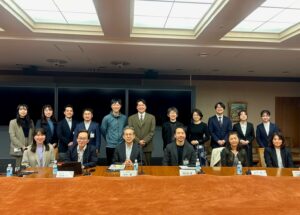
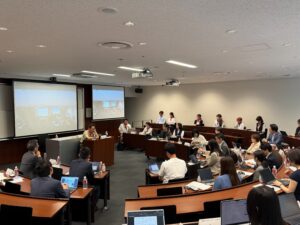
To this end, our laboratory, under the leadership of Professor Suzuki—who served as an inaugural academic member of the Prince of Wales’s (as he then was) Accounting for Sustainability Project (A4S)—has adopted a proactive stance to participate from the conceptual stage. Our aim is to determine the optimal structure required to render TISFD a substantially meaningful framework. Our researchers have actively participated in meetings with prominent figures, including Chair P. Bakker and Executive Director S. Rawson, establishing a channel for direct and collaborative engagement (As of March 21, 2026).